
The Default Market Offer Isn't a Discount — It's a Safety Net
And if you're paying above DMO/VDO, you're being overcharged
Free electricity sounds like a dream come true, but Victoria's new Midday Power Saver offer and the Solar Sharer program rolling out across other states come with important caveats that could impact your overall energy costs.

Before getting excited about "free" electricity, it's crucial to crunch the numbers based on your actual usage patterns and compare the total costs with your current plan.
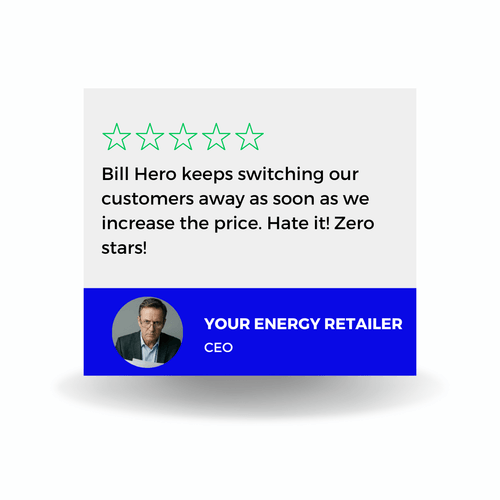
Not a subscriber yet? What are you waiting for!? Bill Hero Guarantees your energy savings, right from the very first bill comparison.
The Solar Sharer Offer represents a significant shift in how Australian households can access renewable energy benefits without installing their own solar panels. Under this program, eligible customers receive completely free electricity between 10am and 3pm daily, tapping into the abundant solar generation flooding the grid during these hours.
The program is rolling out progressively across National Electricity Market (NEM) states, with New South Wales, Queensland, and South Australia leading the charge. The Australian Energy Market Operator (AEMO) has been instrumental in facilitating this initiative, recognising the need to better utilise excess solar generation during midday periods when rooftop solar systems are producing at peak capacity.
What makes this offer particularly appealing is its accessibility — you don't need solar panels on your roof to participate. This democratises access to cheap renewable energy, allowing renters and apartment dwellers to benefit from Australia's solar boom in ways previously unavailable to them.
Victoria has announced its own version called the Midday Power Saver, matching the Solar Sharer Offer but with some distinct Victorian characteristics. The program will provide the same 10am-3pm free electricity window, ensuring Victorian households aren't left behind as other states embrace midday solar abundance.
Key differences in Victoria's approach include integration with the Victorian Default Offer (VDO) framework rather than the Default Market Offer used in other states. The Essential Services Commission Victoria will oversee implementation, potentially offering stronger consumer protections given Victoria's historically more regulated energy market approach.
Free electricity programs could actually cost more than your current plan if you can't shift 40% of usage to midday hours.
The October 2026 implementation timeline gives Victorian households substantial lead time to prepare, assess their current energy plans, and consider whether shifting usage patterns to maximise free midday power makes financial sense for their circumstances.
These free electricity programs operate through a clever but potentially problematic mechanism — they're being delivered via the Default Market Offer (DMO) and Victorian Default Offer (VDO) frameworks. The Australian Energy Regulator sets the DMO as a price cap and fallback option for customers who haven't actively chosen a market offer.
The government chose this delivery mechanism to ensure widespread accessibility and prevent retailers from cherry-picking profitable customers. By mandating these offers through the default framework, they guarantee every household has access to a free electricity option, regardless of their creditworthiness or consumption profile.
However, this approach creates an inherent tension — DMO and VDO rates are typically set higher than competitive market offers to encourage active market participation. This means the baseline rates outside the free 10am-3pm window could be substantially more expensive than what engaged consumers currently pay on competitive plans.
Nothing in the energy market is truly free — retailers will need to recoup lost midday revenue somehow. Expect significantly higher rates during morning peak (6am-10am) and evening peak (3pm-9pm) periods when household demand is highest and solar generation drops off.
Early modelling suggests peak rates could increase by 40-60% compared to standard time-of-use tariffs, potentially reaching 50-60c/kWh during winter evening peaks. These elevated rates during high-usage periods could quickly erode any savings from free midday electricity if you can't substantially shift your consumption patterns.
The redistribution effect means households unable to use electricity during free periods effectively subsidise those who can, creating a cross-subsidy that may disproportionately impact shift workers, families with school-age children, and others with inflexible schedules.
The VDO and DMO rates for 2024-25 are already 20-30% higher than the best market offers available. When you factor in the likelihood of even higher peak rates to offset free midday power, the total cost differential becomes stark.
Consider a typical Melbourne household on a competitive market offer paying 25c/kWh flat rate versus the Midday Power Saver with free electricity 10am-3pm but 55c/kWh during peaks. Unless this household can shift at least 40% of their total consumption to the free window, they'll pay more overall despite the "free" electricity.
 Richard Foxworthy
Hidden costs compound the challenge — many retailers may introduce higher daily supply charges, demand charges, or restrictive contract terms that lock customers into these plans even if their circumstances change.
The break-even calculation depends heavily on your ability to shift high-consumption activities to the 10am-3pm window. Running pool pumps, dishwashers, washing machines, and dryers during free periods can generate substantial savings if you're disciplined about timing.
A household currently paying $2,000 annually could save $400-600 if they shift 50% of usage to free periods — but this requires running major appliances exclusively during business hours.
For retirees, remote workers, or households with battery storage systems that can charge during free periods, the economics become more favourable.
Households with genuinely flexible daytime usage patterns stand to benefit most from these programs. Retirees who can run appliances during the day, remote workers able to shift air conditioning and heating loads to free periods, and homes with programmable devices see the greatest savings.
High electricity consumers paradoxically benefit more — if you're already paying $3,000+ annually and can shift substantial loads, the absolute dollar savings multiply. Households with electric vehicles that can charge during work hours while parked at home represent another winner category.
Work-from-home arrangements have surged post-pandemic, creating a cohort of consumers perfectly positioned to maximise these offers. Running home offices, air conditioning, and cooking during free periods can deliver meaningful savings for this growing demographic.
Families with traditional work schedules face significant challenges in maximising these offers. Parents leaving home by 8 am and returning after 5 pm miss the entire free window, potentially paying higher evening rates for cooking, homework supervision, and family activities.
Shift workers, healthcare employees, and others with non-standard schedules may find themselves consistently using power during the most expensive periods. The two-tiered system effectively penalises those whose employment or life circumstances prevent them from consuming electricity at midday.
Vulnerable consumers including elderly people unable to program appliances, low-income households in poor-quality housing requiring evening heating/cooling, and renters unable to install timers or smart devices face structural disadvantages that could increase energy poverty rather than alleviate it.
Achieving genuine savings requires shifting 30-50% of total consumption to the 10 am-3 pm window — a challenging target for most households. Priority appliances include pool pumps (if applicable), hot water systems, dishwashers, washing machines, and dryers.
Practical maximisation strategies include installing timers on major appliances, pre-cooling or pre-heating homes during free periods, batch cooking during midday, and potentially investing in battery storage to capture free electricity for evening use. These lifestyle changes require upfront investment in time, technology, and habit formation that may not suit everyone.
Smart home technology becomes almost essential — programmable thermostats, smart plugs, and appliance timers help automate usage shifting. Without these tools, manually managing consumption patterns becomes an exhausting daily chore most households won't sustain long-term.
Start by examining your last 12 months of electricity bills to understand your current rates and usage patterns. Calculate your average cost per kWh, including all charges — many competitive market plans offer rates 20-30% below default offers, even before considering free periods.
Map your hourly usage if your meter provides this data, and identify the percentage currently falling within the proposed 10am-3pm free window. If it's below 20%, you'll need substantial behaviour change to benefit. Compare your total annual cost under current arrangements versus projected costs with higher peak rates offset by free midday power.
Consider seasonal variations — winter evening heating and summer afternoon cooling needs may push more consumption into expensive peak periods, exactly when you need energy most. Model best and worst-case scenarios based on realistic usage shifting potential.
Before jumping to "free" electricity offers, explore competitive time-of-use tariffs that might offer better overall value. Some retailers offer shoulder rates (10am-3pm) as low as 15-18c/kWh, without the extreme peak premiums, potentially delivering similar savings with greater flexibility.
Solar-specific plans designed for households with rooftop systems often include favourable midday rates plus feed-in tariffs that could exceed the value of free grid electricity. Even without panels, some solar-friendly plans offer attractive rates to all customers betting on continued growth in renewable generation.
Investigate whether your current retailer will offer amended versions of these government programs with more balanced peak/off-peak ratios. Competition may drive innovation in plan design that captures the spirit of free midday power without the extreme rate disparities.
Ask yourself: Can you realistically shift 30-50% of your electricity usage to the 10am-3pm window without significant lifestyle disruption? This isn't just about running dishwashers — it includes heating, cooling, cooking, and other essential daily activities.
Are you currently on a genuinely competitive market rate negotiated recently, or have you been sitting on the same plan for years? If you're already paying above-market rates, the relative benefit of switching increases even if the absolute savings remain modest.
What are the exit fees, contract terms, and benefit periods? Some retailers may lock customers into 24-month contracts with substantial exit penalties, eliminating flexibility if the plans prove unsuitable. Understand whether introductory benefits expire, leaving you exposed to even higher standard rates after the honeymoon period ends.
Consider whether investing in demand management technology (timers, smart devices, potentially batteries) makes more economic sense than relying on rate arbitrage. The upfront cost might deliver better long-term returns than ongoing bill uncertainty tied to usage patterns you struggle to maintain.
The promise of free electricity between 10 am and 3 pm sounds revolutionary, but the reality is more nuanced. For the right household — one with flexible schedules, smart technology, and disciplined usage habits — these programs could deliver meaningful savings. But for many Australian families juggling work, school, and life commitments, the higher peak rates might turn "free" electricity into an expensive trap. Before October 2026 arrives, take time to analyse your usage patterns honestly and explore all market options. Sometimes the best deal isn't the one with "free" in the headline — it's the one that fits your actual life.
Got opinions about the Solar Sharer and Midday Saver plans? Have your say in the comments, but please read and understand our Community Guidelines first.
 Richard Foxworthy

And if you're paying above DMO/VDO, you're being overcharged

Working from home has become the new normal for millions of Australians, but many are discovering an unwelcome side effect: skyrocketing energy bills. The good news? There are proven strategies to keep your costs down while maximising your tax deductions.

Small business owners are feeling the pinch from rising energy costs, but the good news is there are proven ways to slash your power bills without sacrificing productivity. Here's what you need to know to start saving immediately.

Default electricity prices are getting a welcome shake-up in 2026-27, with the Australian Energy Regulator announcing meaningful price reductions across multiple states. If you're on a default offer or considering your options, these changes could put real money back in your pocket.
Sign up for Savings as a Service, Bill Hero's monthly newsletter full of tips, practical advice and the latest info to help you save on your bills.