The Default Market Offer Isn't a Discount — It's a Safety Net
And if you're paying above DMO/VDO, you're being overcharged
And if you're paying above DMO/VDO, you're being overcharged

It's that time of year again, when news of the upcoming Default Market Offer, and Victorian Default Offer prices gets into circulation. Default Offer prices get reset every year, and come into effect on 1 July. This year, the news is good — Default Offer prices are set to decrease, and understandably, most energy consumers are happy about that.
There's a lot of confusion in the Australian energy market about what the Default Market Offer (DMO) — or the Victorian Default Offer (VDO) if you're in Victoria — actually is. Many people assume it represents some kind of benchmark deal, or even a good price to be on. It doesn't, and it isn't.
Understanding what the DMO/VDO actually does — and doesn't — do is one of the most useful things you can know about the retail energy market.
The DMO is a regulated price cap set annually by the Australian Energy Regulator (AER). The VDO is the Victorian equivalent, set by the Essential Services Commission (ESC). They apply across the competitive regions of the National Electricity Market: New South Wales, South Australia, South East Queensland, and Victoria.
Their purpose is consumer protection. They exist to ensure that energy retailers cannot charge unlimited amounts to customers who aren't actively engaged in the market — people who have never switched, are on very old plans, or simply haven't been paying attention. In regulatory language, the DMO and VDO are a "safety net."
That framing matters. A safety net is not a good deal. It's the floor below which things should not fall.
 Richard Foxworthy
The DMO does something important for competition: it gives retailers a published reference price against which to advertise their Market Offers. Retailers are required to show their prices as a percentage above or below the DMO/VDO. So a plan advertised as "15% below DMO" gives you a clear signal that it's cheaper than the regulated cap.
This system was designed to make comparisons easier. And when it works, it does — competitive Market Offers are typically priced meaningfully below the DMO, because retailers use them to attract new customers. According to the ACCC, switching from a standing offer at the DMO price to the median market offer typically saves between around $100 per year in South Australia and around $250 per year in South East Queensland.
That's a real saving. But it's a saving relative to the safety net — not a saving relative to what you are actually paying right now.
Here's where things get genuinely alarming.
The DMO protects customers on standing offers — the default contract you fall onto if you've never actively chosen a plan. But only 10% of Australian energy consumers are actually on a standing offer. The rest of us are on market offers, not standing offers. And being on a market offer does not automatically mean you're getting a competitive price.
Why? Because market offers aren't fixed in time. Retailers can — and do — adjust the prices on existing plans, accumulating a large portfolio of legacy plans with varying prices. Customers who signed up for a competitive deal years ago may find their plan has quietly become one of the more expensive options in the market.
The result is that a significant number of customers on market offers are actually paying more than the DMO, despite theoretically being in the competitive part of the market.
Nearly a quarter of a million households are paying over 10% more than the regulated price cap that was designed to protect them.
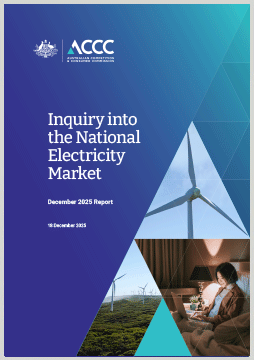
The ACCC's December 2025 inquiry into the National Electricity Market found that 36.5% of residential customers on market offers — nearly 2.5 million people — were paying prices at or above the default offers. Around 434,000 of those customers were paying more than 10% above the DMO/VDO.

Read that again: nearly a quarter of a million households are paying over 10% more than the regulated price cap that was designed to protect them.
The ACCC has a name for this pattern: the loyalty penalty. Here at Bill Hero, we call it the loyalty tax. The longer you stay on the same plan without reviewing it, the more likely it is that your plan has drifted above the market.
The data is stark. Among customers on flat rate plans:
If your plan is over three years old, there is nearly a 75% chance you're paying at least the DMO price — and you could be paying a lot more. On average, customers on plans more than three years old pay around $221 per year more than those on current plans.
Loyalty, in the energy market, is rewarded with higher bills.
The DMO/VDO is useful as a reference point when comparing advertised Market Offers. A plan priced 10-15% below the DMO is genuinely cheaper than the safety net — and that's a meaningful number.
But the more important question isn't "am I below the DMO?" It's "am I on a current competitive Market Offer?" Because if you haven't actively switched or updated your plan in the last year or two, there's a good chance the answer is no — and you may be paying above the safety net without realising it.
The energy market is designed to reward customers who stay engaged. Retailers compete hard on acquisition offers to win new customers, but the economics of legacy plans work in the retailer's favour. Your old plan is quietly becoming the profit margin on someone else's discounted deal.
Bill Hero automatically monitors your energy bills and compares them with current market offers whenever one arrives. We don't just check whether you're below the DMO. We compare your actual plan — including all its pricing elements — against what's genuinely available right now in your area.
The DMO is a safety net. Bill Hero is the tool that stops you needing it.
If there's a better offer available, we'll tell you about it. If you've authorised us to act, we can switch you to it. The DMO is a safety net. Bill Hero is the tool that stops you needing it.
Got opinions about Default Offer prices? Have your say in the comments, but please first read and understand our Community Guidelines.
 Richard Foxworthy

Default electricity prices are getting a welcome shake-up in 2026-27, with the Australian Energy Regulator announcing meaningful price reductions across multiple states. If you're on a default offer or considering your options, these changes could put real money back in your pocket.

Free electricity sounds like a dream come true, but Victoria's new Midday Power Saver offer and the Solar Sharer program rolling out across other states come with important caveats that could impact your overall energy costs.
Sign up for Savings as a Service, Bill Hero's monthly newsletter full of tips, practical advice and the latest info to help you save on your bills.